Areas of Focus
Every child communicates differently. Julie works with families across a range of speech and language needs — meeting each child exactly where they are.
Late Talkers | Autism | AAC | Articulation | Language | Motor Speech | Feeding | Caregiver Coaching | Myofunctional
Late Talkers & Early Language Delays
Is your toddler not talking yet — or saying far fewer words than other children their age? You're not alone, and early support makes a significant difference.
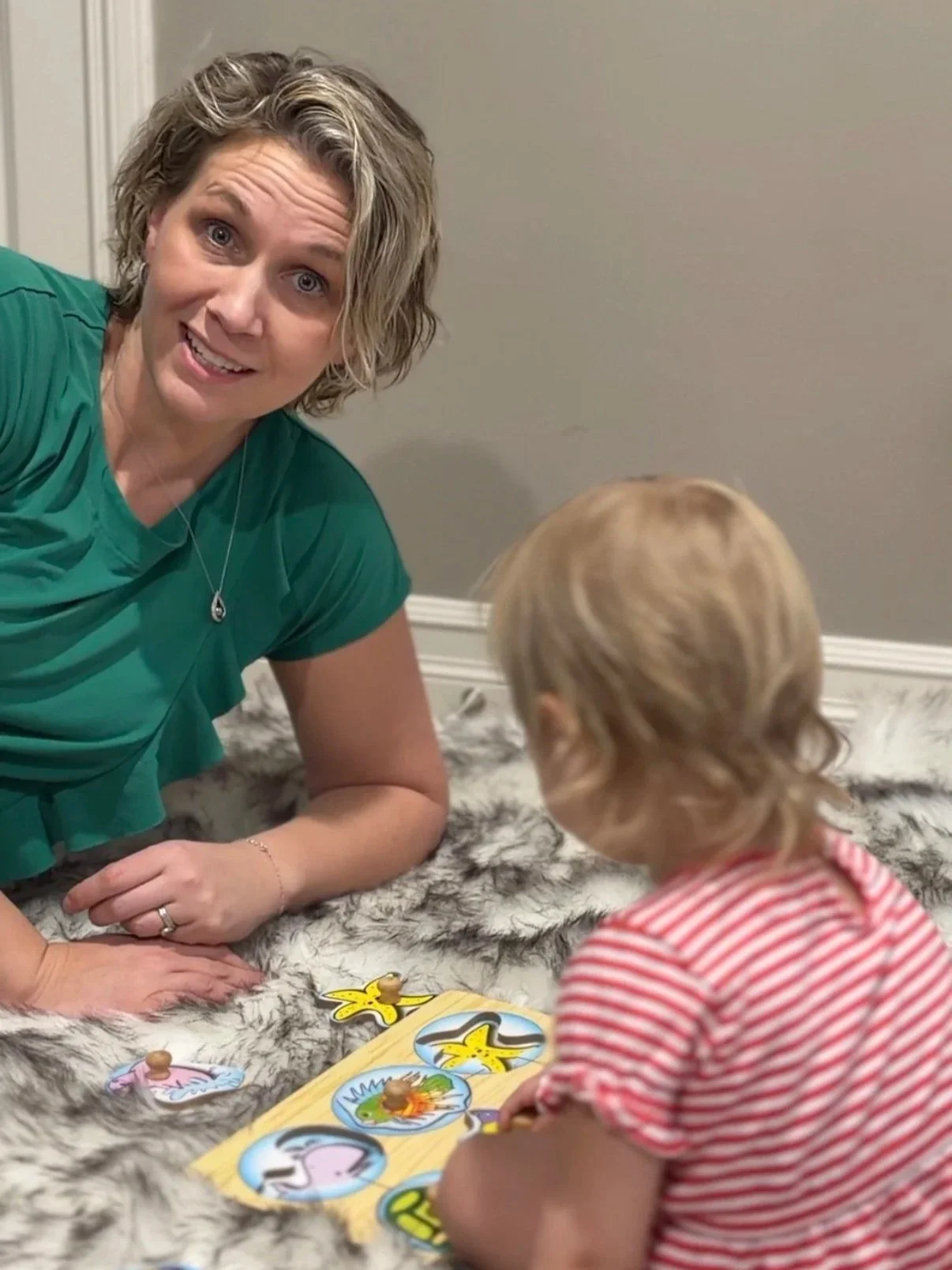
Julie works with children from 18 months onward who are showing signs of delayed expressive or receptive language. Sessions focus on building vocabulary, understanding, and communication confidence—with parents as active partners every step of the way.
Signs to watch for:
Not saying any words by 12 months
Fewer than 50 words by age 2
Not combining two words by age 2.5
Difficulty understanding simple instructions
Autism Spectrum Disorder & Social Communication
Children on the autism spectrum often experience the world differently — including how they communicate, connect, and express themselves. Julie takes a neurodiversity-affirming approach, building on each child's strengths while supporting their unique communication needs.
Support may include developing functional communication, building social language skills, supporting transition to school, and coaching caregivers on strategies they can use every day at home.
Augmentative & Alternative Communication (AAC)
AAC includes any tool or strategy that supports communication beyond speech — from picture boards and sign language to high-tech speech-generating devices. AAC is not a last resort. It supports language development and gives children a voice right now.
Julie has extensive experience assessing for and implementing AAC systems across a range of ages and diagnoses. She works closely with families and school teams to ensure AAC is integrated meaningfully into everyday life.
Articulation & Speech Sound Disorders
Is your child difficult to understand? Are they leaving sounds off words, substituting one sound for another, or frustrated when people can't understand them?
Speech sound therapy helps children produce sounds clearly and confidently. Julie uses evidence-based approaches tailored to each child's specific error patterns, age, and learning style — with strategies parents can carry into daily routines at home.
Language Delays & Disorders
Language is more than talking — it includes understanding what others say, following instructions, building sentences, telling stories, and navigating conversations. Children with language delays may struggle in any of these areas.
Julie supports children with both receptive language (understanding) and expressive language (expression) challenges across all ages, from toddlers to school-age children preparing for academic demands.
Motor Speech Disorders (Childhood Apraxia of Speech)
Childhood Apraxia of Speech (CAS) is a motor speech disorder where the brain has difficulty coordinating the precise movements needed for clear speech. Children with CAS know what they want to say—but the message between the brain and mouth gets disrupted.
Early, intensive, and consistent therapy is critical for CAS. Julie uses evidence-based motor learning approaches and works closely with families to ensure practice happens consistently between sessions.
Feeding & Oral Motor
Mealtimes should not be a battle. Whether your child is a picky eater, has sensory sensitivities around food, or has oral motor challenges affecting chewing and swallowing, feeding therapy can help.
Julie supports children and families with food refusal, texture aversion, limited food repertoires, and the mealtime stress that often accompanies feeding difficulties. A calm, child-led approach guides all feeding support.
Caregiver Coaching & Parent-as-Partner
Research is clear: children make the greatest gains when their caregivers are active participants in therapy. Julie's approach places parents and caregivers at the center of every session—not as observers, but as the most important communication partners in their child's life.
Through caregiver coaching, you'll learn practical strategies you can use throughout your day—at breakfast, in the car, during bath time—turning everyday moments into powerful language learning opportunities.
Orofacial Myofunctional Therapy
`Does your child breathe through their mouth, rest their tongue in an unusual position, or have a lisp that just won't resolve with traditional speech therapy? These can all be signs of a myofunctional disorder — and myofunctional therapy can help.
Orofacial myofunctional therapy (OMT) retrains the muscles of the mouth, tongue, lips, and face to establish correct tongue resting posture, healthy swallowing patterns, and nasal breathing. It's commonly recommended for children with:
A tongue thrust or low tongue rest posture
A lisp (/s/ or /z/ sounds produced with the tongue between the teeth)
Mouth breathing habits
An open bite flagged by their dentist or orthodontist
A history of tongue tie — even after a frenectomy release
Myofunctional therapy is available virtually, making it accessible to families across Alberta, BC, and Arizona from the comfort of home.
→ Read more: What is Myofunctional Therapy? A Guide for Parents`